How To Cook The Perfect Christmas Ham: Julia's Step By Step Recipe To Cook A Pheasants Hill Farm Ham For Christmas
Dec 10, 2025
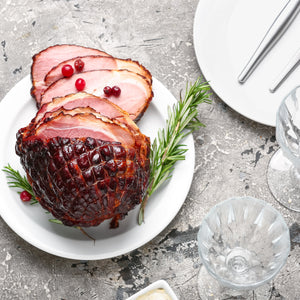
Glazed Free-Range Tamworth Christmas Ham
Cooking a ham is an all-day affair. It can’t be rushed. It can’t be boiled hastily. A boiled ham is a spoiled ham. Instead, it needs to be lightly poached, where the water never leaves a tremble apart from the occasional bubble. Anything more extreme will make the ham tough. Slow and steady wins the race when it comes to cooking the Christmas ham. It takes time so enjoy the process. Christmas is truly here when the ham is on.
I personally always cook mine on Christmas eve while pottered around the house. It is a ceremony for me and one which I really enjoy. The ritual of getting out my biggest pot (which I only use for this recipe) filling it up with water, so heavy I nearly can’t lift it. Chopping up the vegetables and picking the bay leaves. Counting the peppercorns then chucking more in anyway. When the Christmas eve ham is on, all is ok with the world.
Ingredients:
For the ham:
1 x 3.2kg free range, dry cured ham.
2 carrots
2 celery sticks
1 onion/ green part of a leek or both
2 bay leaves
6-9 whole peppercorns
For the glaze:
1.5 tbsp honey
1.5 tbsp brown sugar
2 tbsp of mustard (I used Dijon, you van use English or wholegrain)
Equipment:
- A pot with a lid large enough to fit the ham, comfortably which will probably be the biggest pot you own
- A meat thermometer (not essential but incredibly helpful)
Method:
1. Pop the ham in the pot and cover with water until it is completely submerged. Bring the water to the boil and simmer for 5 minutes. There will be a white foam on the water, this is the excess cure from the ham which we don’t want in the stock. Drain the ham and throw away all this water. Fill the pot up again with fresh water and return to the stove.
2. Add the chopped vegetables, bay leaves and peppercorn to the water and slowly bring the ham to the boil, keep checking on it until it comes to the boil.
3. As soon as the water is boiling, turn the heat down low. The water shouldn’t barely be moving, only with small bubbles and a slight tremble on the water. The temperature of the water should be 85 degree Celsius ( this is where a temperature probe comes in very handy).
4. Poach the ham for 25 minutes per 500g, plus 25 minutes at the end. You are looking for a temperature of 75 degrees Celsius in the centre of the ham (meat thermometer coming in handy again). My 3.2kg ham took 3.5 hours to reach 75 degrees Celsius.
5. Heat your oven to 230 degrees Celsius. Line a baking tray with two layers of foil.
6. Remove the ham from the pot and let it cool down enough that you can handle it. While it is cooling, make the glaze. Mix together mustard, sugar and honey in a bowl and set aside.
7. When the ham is cool enough to handle, snip off the string and remove. Take a knife and carefully remove the skin and discard, leaving the fat on the ham. Score the ham fat in a crisscross pattern. Place onto foil lined baking tray.
8. Brush the ham with ½ of the glaze. Pay most attention to the fat, putting most of the glaze on here, with some on the meat too. Place into a hot oven and check every 2 minutes. It can colour and burn very quicky so keep an eye on it. Remove, baste and return to the oven.
9. After another couple of bastings, brush the rest of the glaze over and return to the oven for another 2 minutes. The ham is done when you like the way it looks. Remove from the oven and leave in the tray for 30 minutes.
10. Once slightly cooled, baste one last time, put on your favourite platter and serve.
11. It is always easier to carve cold so if you aren’t eating straight away, leave it to cool complete (refrigerated is best) and carve with a very sharp carving knife (not serrated).
A note about buying your ham:
I tend to advise people to buy 250g of ham, raw weight, per person. So 4 people would need a 1kg ham, raw weight. But this amount will leave you no leftovers. No leftovers I hear you say?! I know. The Christmas ham in my opinion is the greatest of leftovers known to man. So this is where you use your own discretion of how much to buy. I have known couples buying a full ham which could technically feed 12 people. I have known people buying small ham for Christmas day and then another bigger ham for leftovers. Or just buy enough for the meal and no more. No judgement here. You do what works for you.
A note on storing your ham uncooked:
Your ham must be stored in the fridge, in its vacuum pack, until you cook it. Don’t keep it in your garage, don’t keep it in your car boot. Take everything else out of your fridge that doesn’t absolutely require refrigeration (fruit, vegetables, butter, alcohol!) and store them somewhere else. Your fridges job at Christmas time is to keep your meat cold. The end.
A note on soaking your ham:
You don’t need to presoak a Pheasants Hill Farm ham. We use a special low salt cure so soaking isn’t necessary, if anything it will take away from the flavour. If you aren’t cooking a Pheasants Hill ham, it will need soaking overnight.
A note about the first boil:
You boil the ham and throw away the first batch of water to get rid of any excess cure. This means that the liquid is able to be used as stock for soups or stews. It is delicious so don’t waste it.
A note on reheating:
To reheat the ham, I think its best to slice it cold then reheat very slowly, covered in foil, with a splash of stock/water in the dish in a lowish oven (150-160degrees) until hot. This way it won’t dry out.